Sales Enablement Software vs. Interactive Demo Platforms: What's the Real Difference?
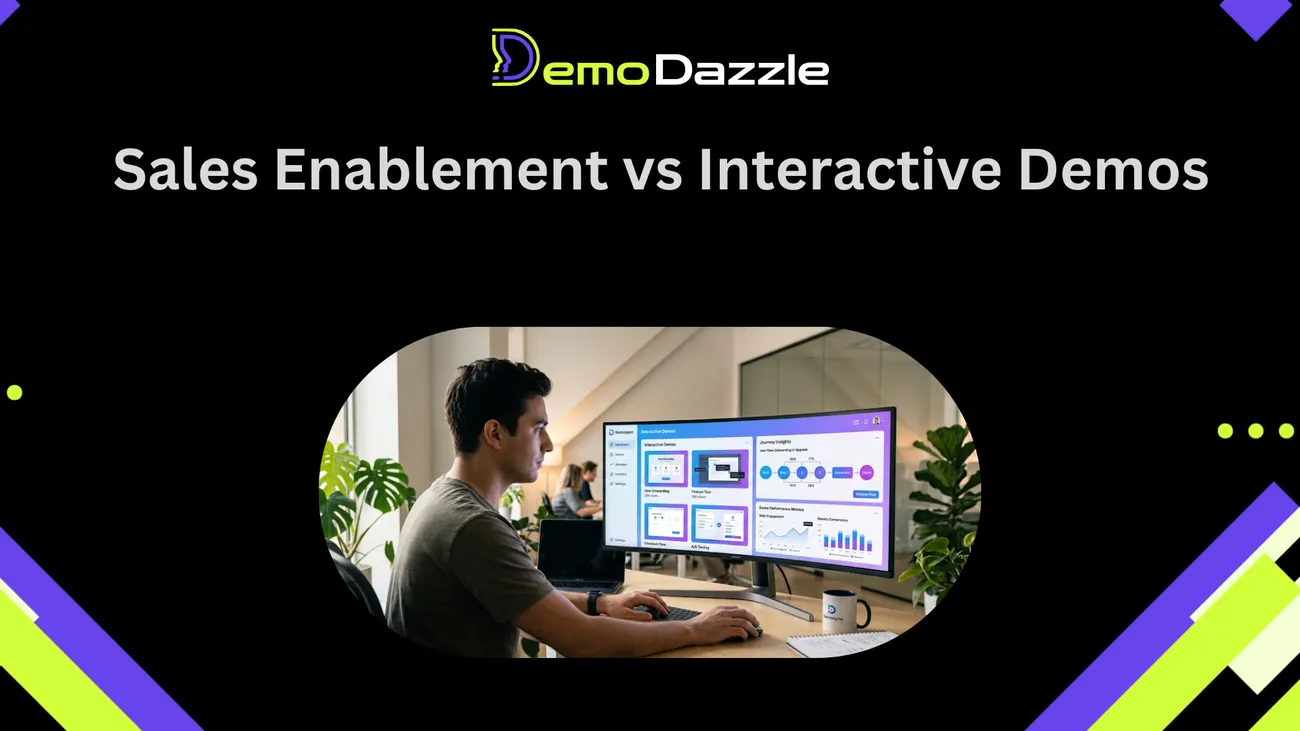
Sales enablement software and interactive demo platforms both support revenue growth, but they serve different purposes. Sales enablement platforms help internal sales teams with training, content management, coaching, and productivity, while interactive demo platforms help prospects explore products through self-guided, hands-on experiences. As modern B2B buyers increasingly prefer self-service evaluation, interactive demos have become a powerful way to boost engagement, accelerate decision-making, and improve conversions. Together, these solutions create a more effective buying journey by helping sales teams sell better and buyers understand products faster.
Modern B2B buyers expect more than brochures, slide decks, and static product presentations. They want hands-on experiences that help them understand a product before booking a call. As a result, companies are increasingly investing in both sales enablement software and interactive demo platforms.
While these tools often support the same goal helping teams close more deals they solve very different problems.
So, what's the real difference between sales enablement software and interactive demo platforms? And which one should your business prioritize?
What Is Sales Enablement Software?
sales enablement software like Bizio empowers businesses by combining customer onboarding, project management, resource planning, billing, and business insights in one unified platform.
These platforms typically help organizations:
Manage sales content and collateral
Train and onboard sales representatives
Track buyer engagement
Improve sales productivity
Standardize messaging across teams
Popular sales enablement solutions focus on making sales teams more efficient and ensuring they have the right resources at the right time.
What Are Interactive Demo Platforms?
Interactive demo platforms allow prospects to experience a product without needing a live demonstration.
Instead of watching a traditional software presentation or sitting through a lengthy sales call, prospects can explore product features through guided walkthroughs, self-service tours, and interactive product demos.
These platforms help companies:
Showcase product value earlier in the buying journey
Reduce repetitive live demonstrations
Improve product understanding
Generate higher-quality leads
Accelerate sales cycles
In many ways, an interactive demo platform transforms a standard product demo into an engaging, hands-on experience.
The Core Difference
The simplest way to understand the difference is this:
Sales enablement software helps sales teams sell.
Interactive demo platforms help buyers experience the product.
Sales enablement tools focus on internal efficiency.
Interactive demo platforms focus on external product engagement.
While both support revenue growth, they address different stages of the customer journey.
| Sales Enablement Software | Interactive Demo Platforms |
|---|---|
| Supports sales teams | Supports prospects and buyers |
| Content management | Product experiences |
| Training and coaching | Interactive product tours |
| Sales productivity | Product engagement |
| Internal focus | Customer-facing focus |
| CRM integrations | Self-guided demos |
Why Buyers Are Shifting Toward Interactive Product Experiences
Today's software buyers conduct extensive research before speaking with sales.
Many want to evaluate products independently.
This trend has increased demand for:
Interactive presentation tools
Self-guided product tours
Product walkthroughs
Interactive product demos
Traditional software presentation methods often rely on screenshots, PDFs, or live demonstrations. Interactive demo platforms offer a more engaging alternative by allowing users to explore features at their own pace.
Where Product Demos Fit Into the Sales Process
A product demo remains one of the most powerful tools in B2B sales.
However, not every prospect is ready for a live meeting.
Interactive demo platforms help bridge this gap by offering:
On-demand product demos
Guided feature exploration
Personalized demo experiences
Lead qualification opportunities
This allows prospects to experience value before investing time in a sales conversation.
Interactive Demo Platforms vs. Demo Recording Tools
Many businesses compare interactive demo platforms with tools such as DemoCreator and other software presentation solutions.
While DemoCreator is primarily designed for creating video-based demonstrations and tutorials, interactive demo platforms focus on user interaction.
The difference is significant:
Demo Recording Tools
Create videos and tutorials
One-way viewing experience
Limited user interaction
Interactive Demo Platforms
Allow hands-on exploration
Simulate real product experiences
Capture engagement data
Enable self-guided learning
A recorded product demo shows users what a product does.
An interactive demo lets them experience it themselves.
When Sales Enablement Software Is the Right Choice
Sales enablement software may be the better investment if your primary challenge is:
Sales onboarding
Content organization
Sales coaching
Team productivity
Sales performance management
These platforms are designed to support sales representatives throughout the sales process.
When Interactive Demo Platforms Are the Right Choice
Interactive demo platforms are ideal when your goal is to:
Increase product engagement
Improve website conversions
Reduce demo bottlenecks
Generate qualified leads
Accelerate product adoption
Companies with complex SaaS products often benefit significantly from interactive demos because they allow prospects to understand the product before speaking with a representative.
Do You Need Both?
In many cases, yes.
Sales enablement software and interactive demo platforms are complementary rather than competitive.
A modern sales stack may use:
Sales enablement software for internal efficiency
Interactive presentation tools for buyer engagement
Interactive demo platforms for product discovery
CRM systems for pipeline management
Together, these tools create a more effective and buyer-friendly sales experience.
Final Thoughts
The debate between sales enablement software and interactive demo platforms isn't really about choosing one over the other.
Sales enablement software helps your team communicate value more effectively.
Interactive demo platforms help buyers experience that value firsthand.
As buyer expectations continue to evolve, companies that combine strong sales enablement practices with engaging product demo experiences will be better positioned to shorten sales cycles, improve product adoption, and drive revenue growth.
If your prospects want to explore your product before talking to sales, an interactive demo platform may be the missing piece in your sales strategy.
Ready to Turn Product Interest Into Product Experience?
Modern buyers don't want to sit through endless presentations—they want to explore products on their own terms.
With DemoDazzle, you can create interactive product demos, guided walkthroughs, and self-service product experiences that help prospects understand your product faster and move through the sales funnel with confidence.
Whether you're looking to reduce repetitive live demos, improve lead qualification, or accelerate customer onboarding, DemoDazzle helps you deliver engaging product experiences at scale.
Book a Demo Today and see how interactive product demos can transform your sales process.
Start Exploring DemoDazzle: demodazzle.com
Schedule a Personalized Walkthrough: https://meet.kalnexa.com/agami/demodazzle