Best Sales Enablement Tools in 2026: An Honest Comparison for Modern Revenue Teams
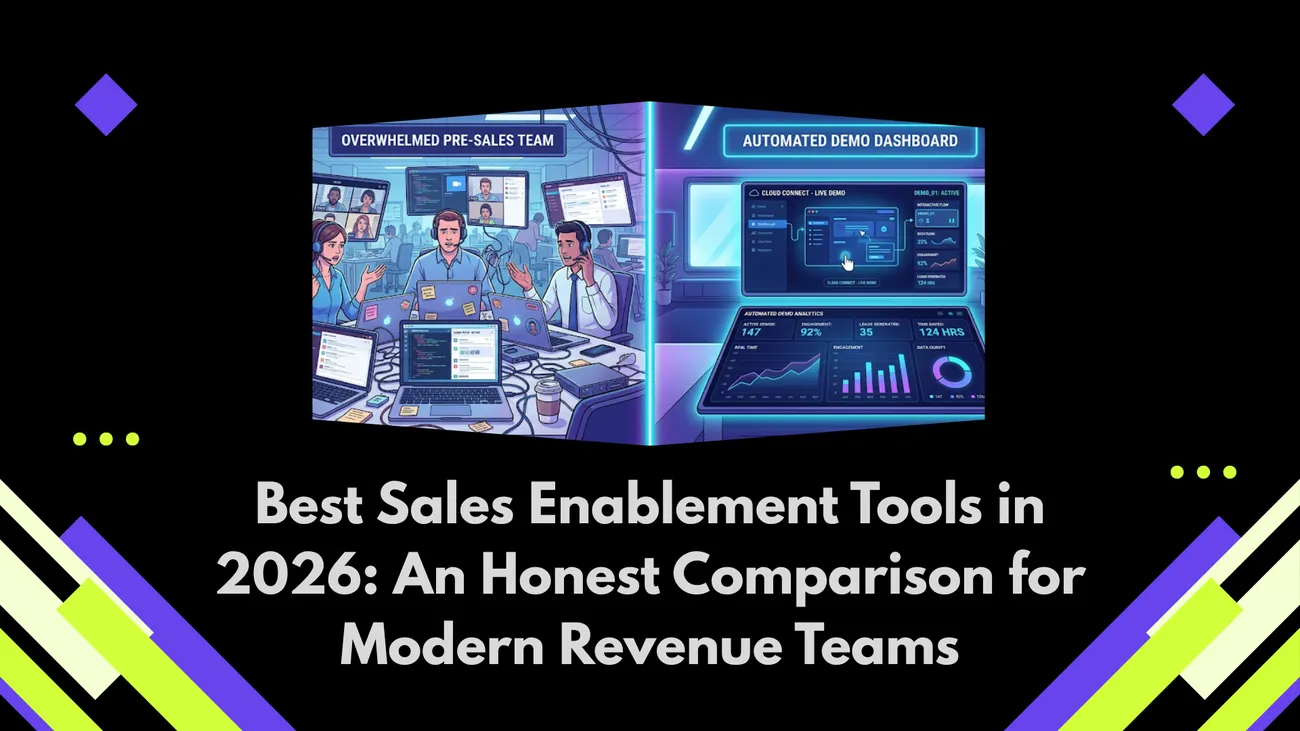
The best sales enablement tools help modern revenue teams close deals faster by improving content management, sales coaching, buyer engagement, and product demonstrations. While traditional sales enablement software focuses on training and content distribution, newer platforms combine interactive demos, analytics, and guided selling experiences to improve conversions. Choosing the right sales enablement platform depends on your team's goals, sales process, and growth stage.
The way sales teams operate has changed dramatically over the last few years.
Gone are the days when sales representatives relied solely on static presentations, lengthy product decks, and disconnected content libraries. Buyers now expect personalized experiences, interactive demonstrations, and faster access to information before making purchasing decisions.
This shift has made sales enablement software one of the most important investments for growing organizations.
However, choosing the right solution isn't always straightforward. Some sales enablement tools focus on content management and coaching, while others specialize in interactive demos and buyer engagement. Enterprise companies often look for a comprehensive sales enablement platform, whereas startups may prioritize flexibility and faster implementation.
In this guide, we'll compare the best options available in 2026, explore their strengths and limitations, and help you determine which solution aligns with your revenue goals.
What Is Sales Enablement Software?
At its core, sales enablement software helps sales teams perform more effectively throughout the buying journey.
Unlike CRM systems that primarily manage customer records and opportunities, sales enablement tools focus on improving execution. They provide representatives with the content, training, analytics, and workflows needed to engage buyers and close deals faster.
A modern sales enablement platform typically includes:
- Content management systems
- Training and onboarding resources
- Guided selling playbooks
- Interactive product demos
- Buyer engagement analytics
- Coaching and certification programs
- Performance reporting
The primary objective of sales enablement software is to increase productivity while creating better customer experiences.
Why Businesses Are Investing in Sales Enablement Tools
The increasing adoption of sales enablement tools isn't surprising.
Today's buyers conduct extensive research before speaking with sales representatives. This means teams need better content, stronger demos, and more personalized interactions throughout the sales process.
The right sales enablement software helps organizations:
- Reduce onboarding time for new hires
- Improve win rates
- Shorten sales cycles
- Standardize buyer experiences
- Increase content utilization
- Deliver more effective product demonstrations
For many organizations, investing in a sales enablement platform has become just as important as implementing a CRM system.
How We Evaluated These Sales Enablement Tools
Every company has different priorities, so we evaluated these solutions using practical criteria that matter to most revenue teams.
Ease of Implementation
Can the platform be deployed quickly without significant technical resources?
Content Management
Does the solution help sales teams organize and distribute content effectively?
Buyer Experience
Can representatives deliver engaging and personalized product experiences?
Analytics and Reporting
Does the software provide actionable insights into buyer behavior and content performance?
Integrations
How well does the platform connect with CRM systems and existing workflows?
Scalability
Can the solution grow alongside the business?
Best Sales Enablement Tools in 2026
1. DemoDazzle
Best for: Interactive product demonstrations and product-led growth teams
DemoDazzle represents a modern approach to sales enablement software by focusing on personalized product experiences rather than traditional presentations.
Instead of spending hours preparing demos, sales teams can create interactive walkthroughs that buyers can explore independently.
Key Features
- Interactive product demonstrations
- Personalized demo experiences
- Demo automation
- Buyer engagement analytics
- CRM integrations
- Self-guided product tours
Pros
- Reduces demo preparation time
- Improves buyer engagement
- Supports product-led growth strategies
- Creates consistent customer experiences
Cons
- More specialized compared to broader enterprise platforms
Ideal For
SaaS companies looking for sales enablement tools that improve product storytelling and accelerate conversions.
2. Highspot
Best for: Enterprise content management and analytics
Highspot is one of the most recognized sales enablement platforms for large organizations.
The platform combines content management, training programs, analytics, and AI-driven recommendations to help revenue teams operate more efficiently.
Key Features
- Content management
- AI recommendations
- Coaching programs
- Analytics dashboards
- Guided selling workflows
Pros
- Comprehensive feature set
- Strong enterprise integrations
- Excellent reporting capabilities
Cons
- Implementation can be resource-intensive
3. Seismic
Best for: Large global organizations
Seismic offers enterprise-grade sales enablement software designed for companies with complex revenue operations.
Its strengths include automation, content personalization, and large-scale deployment capabilities.
Key Features
- Content automation
- Workflow management
- Training systems
- Enterprise integrations
- Analytics tools
Pros
- Highly scalable
- Strong customization options
- Advanced automation features
Cons
- Premium pricing
4. Showpad
Best for: Sales coaching and onboarding
Showpad combines learning and content management into a unified sales enablement platform.
Organizations that prioritize training and sales readiness often consider Showpad among the best sales enablement tools available.
Key Features
- Learning management
- Content organization
- Coaching systems
- Performance analytics
Pros
- Excellent onboarding capabilities
- User-friendly experience
- Strong training modules
Cons
- Limited focus on interactive demos
5. Walnut
Best for: Interactive software demonstrations
Walnut has become popular among SaaS companies seeking sales enablement software that supports personalized product experiences.
The platform enables teams to create no-code demonstrations and measure buyer engagement throughout the sales cycle.
Key Features
- No-code demo creation
- Personalization options
- Analytics dashboards
- Buyer engagement tracking
Pros
- Fast implementation
- Strong demo capabilities
- Easy personalization
Cons
- Limited broader enablement features
6. Mindtickle
Best for: Sales readiness and coaching
Mindtickle focuses heavily on training and development, making it a powerful sales enablement platform for large organizations.
Key Features
- Coaching programs
- Learning modules
- Role-play simulations
- Performance tracking
- Certification systems
Pros
- Excellent training tools
- Strong analytics
- Supports enterprise teams
Cons
- Less emphasis on buyer-facing experiences
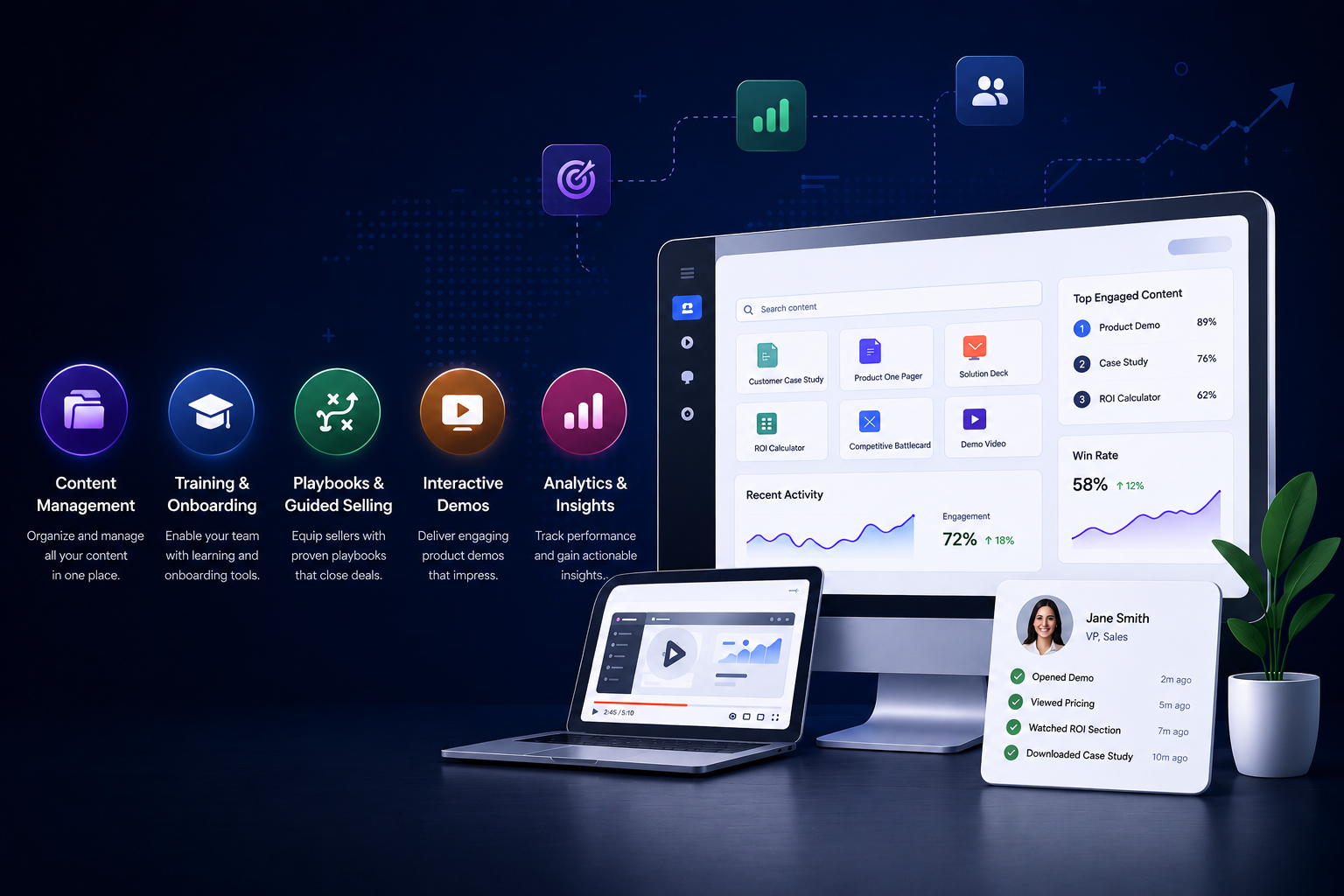
Traditional Sales Enablement Platforms vs Interactive Demo Tools
The definition of sales enablement software has expanded significantly.
Traditional sales enablement tools primarily focused on content distribution and coaching. Today, interactive demo solutions play an equally important role.
| Traditional Platforms | Interactive Demo Tools |
|---|---|
| Content libraries | Interactive product experiences |
| Training programs | Self-guided demos |
| Static presentations | Personalized journeys |
| Coaching systems | Buyer engagement analytics |
| Sales playbooks | Product storytelling |
Many organizations now combine both approaches to create a more complete sales enablement platform ecosystem.
Sales Enablement Software vs Productivity Software
Businesses often confuse sales enablement software with productivity software, but they solve different challenges.
General productivity software helps teams organize tasks, manage schedules, and improve operational efficiency. Examples include collaboration platforms, project management systems, and workflow tools.
In contrast, sales enablement tools specifically focus on helping revenue teams sell more effectively through content, coaching, demos, and buyer engagement.
Both categories are valuable, but they serve entirely different business objectives.
Is Sales Enablement Part of Business Management Software?
Many leaders wonder whether business management software can replace a dedicated sales enablement platform.
The answer is usually no.
While business management software helps organizations manage operations, finance, projects, and internal processes, sales enablement software focuses exclusively on improving sales performance and buyer experiences.
Companies often use both solutions together rather than choosing one over the other.
Choosing the Right Sales Enablement Platform
The best sales enablement platform depends on your organization's needs.
Startups
Recommended options:
- DemoDazzle
- Walnut
These solutions prioritize flexibility, fast implementation, and product-led growth strategies.
Mid-Market Businesses
Recommended options:
- DemoDazzle
- Showpad
- Highspot
These sales enablement tools balance content management with customer engagement capabilities.
Enterprise Organizations
Recommended options:
- Seismic
- Highspot
- Mindtickle
Their advanced features support large-scale revenue operations and global teams.
Essential Features Every Sales Enablement Tool Should Have
Before investing in sales enablement software, consider these critical capabilities.
Content Management
Representatives should quickly access relevant materials without searching through multiple systems.
CRM Integrations
The best sales enablement platforms integrate seamlessly with existing CRM workflows.
Interactive Product Experiences
Modern buyers increasingly prefer interactive demonstrations over traditional slide presentations.
Analytics and Reporting
Strong sales enablement tools provide visibility into:
- Content engagement
- Demo performance
- Buyer activity
- Win rates
- Sales productivity
Training and Coaching
Continuous learning helps organizations maintain consistency while reducing ramp-up time for new hires.
Final Thoughts
The world of sales enablement software continues to evolve rapidly.
Today's best sales enablement tools go far beyond content libraries and training programs. They combine coaching, analytics, interactive demos, and personalized buyer experiences to help organizations close deals more efficiently.
Whether your business needs an enterprise sales enablement platform like Highspot or Seismic, or a demo-focused solution like DemoDazzle, the goal remains the same: empowering sales teams to create better buying experiences and drive revenue growth.
The right investment isn't simply the platform with the most features it's the one that solves your biggest challenges and supports your long-term strategy.
Ready to Transform Your Product Demos?
Modern buyers expect more than static presentations and generic walkthroughs.
DemoDazzle helps revenue teams create interactive product experiences, personalize demos for every prospect, and measure buyer engagement throughout the sales journey.
If you're looking for sales enablement software that combines demo automation with modern buyer experiences, DemoDazzle can help your team reduce preparation time, improve consistency, and close deals faster.
Book a free demo today and discover how interactive product experiences can transform your sales process with Demodazzle.