How Interactive Demos Increase SaaS Conversions
This blog argues that interactive, self-guided product demos are a practical, revenue-generating tactic for SaaS: they let prospects experience value in minutes, improve lead qualification, shorten sales cycles, and boost website conversions. It explains what interactive demos are, why they work, and how they support product-led growth by collecting behavioral signals and enabling personalized follow-up. The post gives design principles (focus on core tasks, short flows, realistic data, branching paths, contextual CTAs, and analytics), common pitfalls (overly complex demos, premature gating, poor UX), placement advice, and balanced gating strategies, with examples and resources to get started.
If you've ever found yourself on a SaaS website and clicked the "Request a demo" button to satisfy your curiosity, you probably expected to be able to test the product right away. So did the potential customers I collaborate with. The catch is that most demonstration processes still lead users to a calendar gate, a sales call, or a long prerecorded tour. These are okay sometimes, but they overlook a big opportunity: customer, led, interactive demos that enable buyers to test the value in minutes.
Interactive product demos for SaaS are not something out of this world. They are a down, to, earth, revenue, generating tactic that increases customer engagement and shortens the sales cycle. To my knowledge, the SaaS businesses that make use of product demos tend to get more qualified leads, better demo, to, trial conversion rates, and they save their salespeople's time from unqualified calls.
What exactly is an interactive demo?
You can consider an interactive demo as a simplified, clickable version of your product that is presented on the website. It is not a video. It is not a full sandbox which is supported by the backend. It is a guided, self, guided, or hybrid experience that is aimed at quickly showing relevant workflows and wins in a few minutes.
The simplified workflows are real work task simulations
There are data and scenario samples which are pre, filled
Contextual tooltips and steps that .........
Include built, in CTAs that prompt next actions such as starting a trial or booking a live walkthrough
Call it a self, guided saas demo, an interactive walkthrough, or an interactive product demo. They all mean the same thing: allow users to derive value first, and only then engage with sales.
Why interactive demos raise conversion rates
We can debate tactics, but here are the true reasons why interactive demos are a success.
Time to value is made quicker. A user can get the benefit of a product at an instance rather than waiting for a call in the future. Removing delay also entails removing doubt.
Good qualification. A lead's actions within the demo reflect their intent. You can tell from which features a lead is interested in, how good your chances are of converting them.
SaaS leverages the moment of sales buyers are not only busy but can only spare little moments for the vendors they loo...
Shorter sales cycle. When prospects already see the product working, live demos become product validation rather than discovery sessions.
Higher conversions from the website to the demo. An easy, to, understand, interactive demo on the features or pricing page of your website greatly contributes to lowering the bounce rate and increasing the number of people who start the demo.
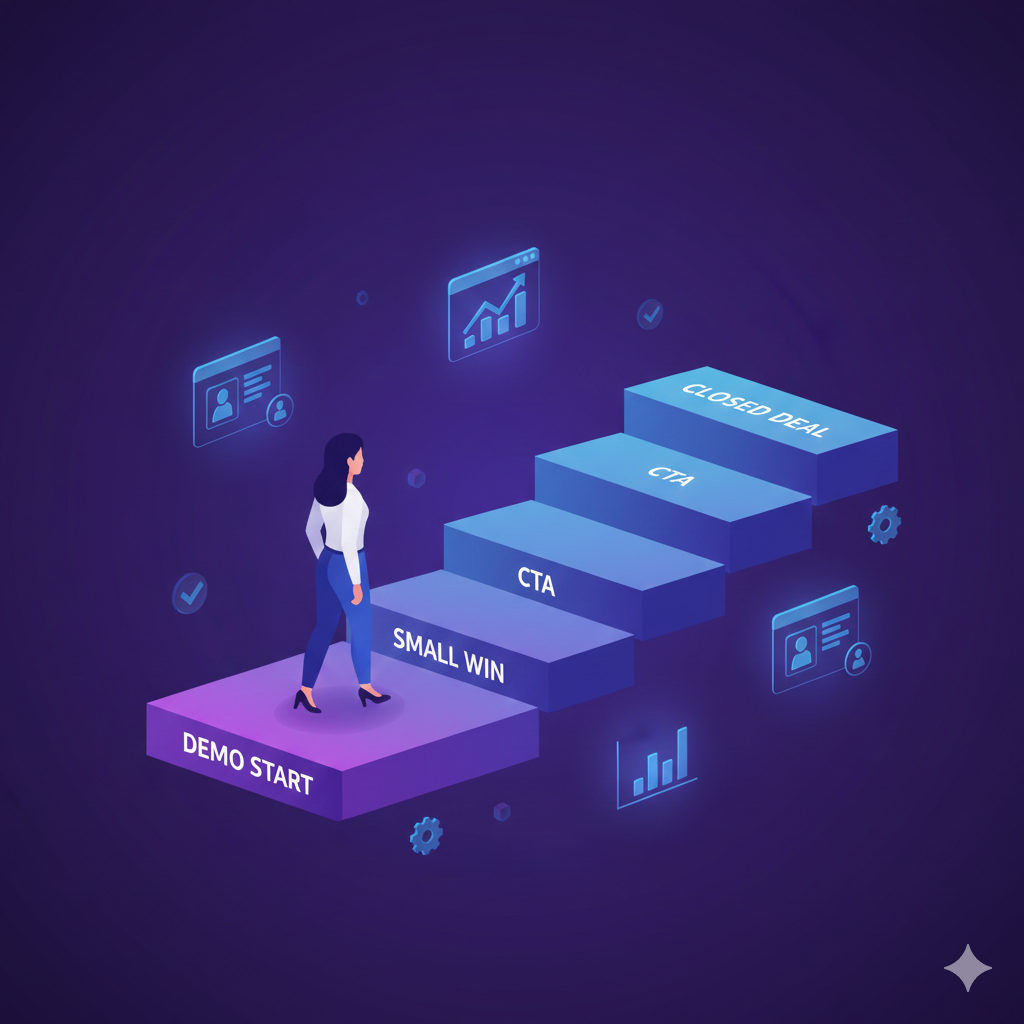
I've noticed something simple but powerful: when a visitor successfully completes a significant task in your demo, they develop a sense of ownership. That small victory makes them more inclined to book a live demo or sign up for a trial.
How interactive demos help product, led growth
Product, led growth (PLG) is a strategy that focuses on allowing the product to be the main selling tool. Interactive product walkthrough software is a perfect fit for that concept.
It's basically a give and take between the two:
People get their initial information through self, guided SaaS demos, which helps to lower the barrier of entry.
Advanced gating and profiling techniques are used to obtain users' data without making them feel uncomfortable.
Lead scoring gets a boost from demo behavioral data and sales or customer success follow, up outreach is made more personalized.
To sum up, interactive demos enable you to expand product, led funnels without the need to hire extra sales reps.
Design principles for effective interactive demos
Design counts. An untidy demo only ends up confusing the audience more rather than enlightening them. Consider these points when creating demos that drive SaaS conversions.
Lead with the core job-to-be-done – Start with the one task that proves your product’s value the fastest.
Keep it short and purposeful – Limit the demo to five to seven steps. Longer tours lose attention and reduce engagement.
Use realistic sample data – Avoid blank or generic screens. Populate fields with believable data to provide real context.
Offer branching paths – Let users choose their use case early (e.g., HR flow vs. marketing flow) to make the experience relevant.
Make CTAs contextual – After a small win, prompt users to book a live demo, start a trial, or download an ROI sheet.
Track micro-conversions – Monitor clicks, feature interactions, and time spent on each step to identify high-intent prospects.
Focus on deal-closing features – You don’t need to replicate 100% of your product. Highlight only the features that drive conversions.
Common mistakes I see and how to avoid them
Not every interactive demo hits the mark. Here are common pitfalls and how to fix them.
Too much complexity.
Problem: Trying to show everything.
Fix: Scope the demo to one or two core scenarios.Problem: Gating too early.
Fix: Offer a short frictionless sample, then request info after value is shown.Problem: Confusing UX.
Fix: Use simple language and highlight the clickable items.Problem: No clear next step.
Fix: Add a clear CTA like "Book a live demo" or "Start free trial."Problem: Ignoring analytics.
Fix: Instrument every step so you can learn and iterate.
I've seen teams build brilliant demos and then watch them flop because they missed basic analytics. Don't be that team.
Examples that actually convert
Examples help make this less abstract. Here are three simple demo flows that I've seen work for different buyer personas.
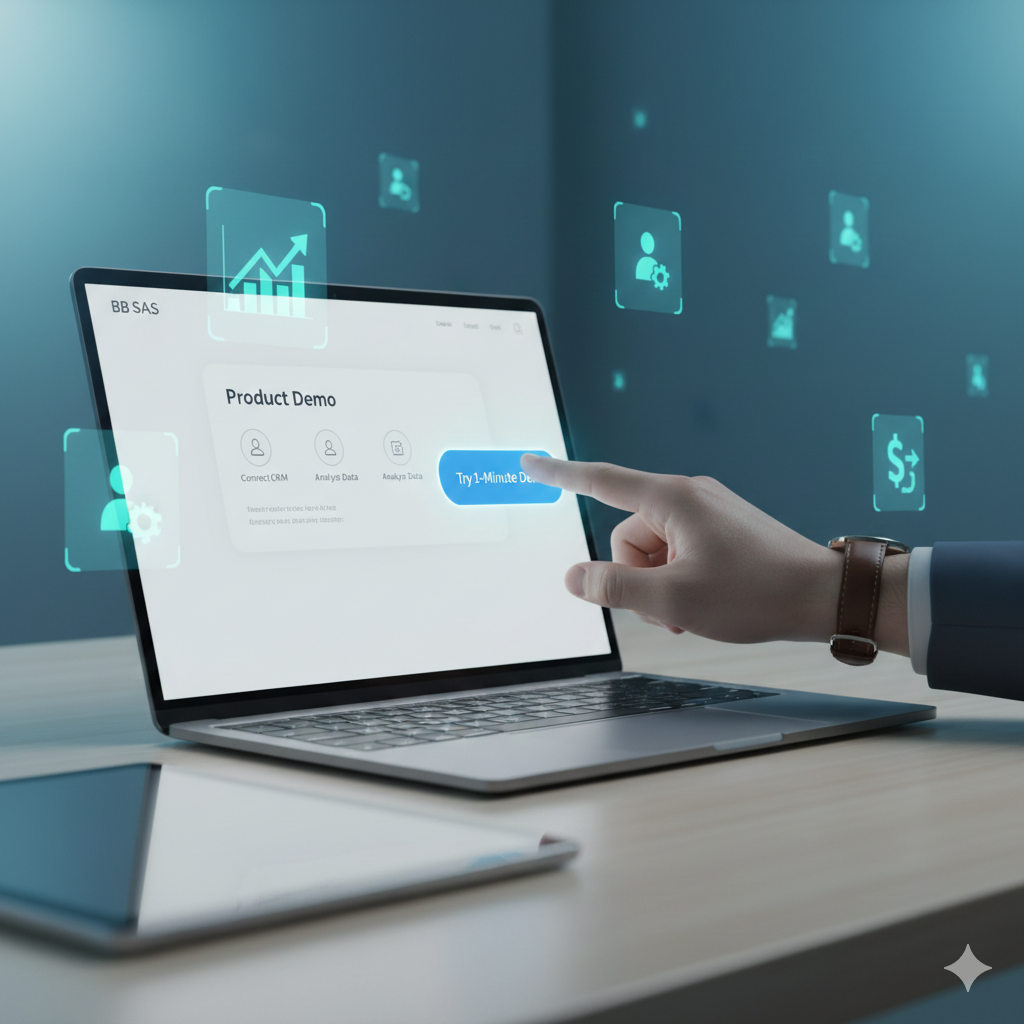
Marketing dashboard demo. Start with pre-filled campaign data, show how to set up an attribution rule, reveal an insight, then offer "Export report" and "Book a live demo" CTAs.
CRM automation demo. Walk through a lead being scored, routed, and entering a nurture sequence. Finish with a "Schedule pilot" CTA for enterprise buyers.
Analytics query demo. Let users run a simple query on sample data, tweak filters, and see a chart. Follow up with a CTA to try a real dataset during a live session.
Each of these gives a small win and paves the way for a higher-value conversation.
Where to place demos for maximum impact
Location matters.
Feature and pricing pages:
Put a short demo next to the description of features and pricing tiers. It helps buyers compare actual workflows, not just feature lists.Homepage hero:
A drastically simplified interactive experience can convert a first, time visitor into an interested lead within a minute.Campaign landing pages:
Match the demo path to the campaign audience. If the ad promised "faster reporting, " lead with the reporting flow.Onboarding emails:
Send a quick demo link to new trial users to reduce time, to, value and increase activation.
Match the demo content with the page intent. People on your pricing page want to know if the product is worth the cost. Reveal to them the workflows that generate ROI.
Gating strategies that don't kill conversions
To gate or not to gate is a debate.If you ask for too little, you get noise, if you ask for too much, you kill traction. Here's a balanced approach I've used that respects both user experience and lead capture.
First, deliver a short, ungated experience that shows value in 60, 90 seconds.
At a logical break, request an email to continue.
Give something back, for example, a deeper demo path or a personalized report.
Use progressive profiling for return visitors to avoid repetitive forms.
Offer enterprise paths: have a quick trial option and a "book a demo with an enterprise specialist" flow for larger accounts.
Prospects who willingly leave contact info after seeing value are better leads than those who converted on an empty landing page form.
Helpful Links & Next Steps
Ready to see what interactive demos can do for your funnel? book a meeting.
Faqs
1. What is an interactive demo in SaaS?
An interactive demo describes a simplified, clickable version of a SaaS product whereby a customer can get the essential workflows and added values directly from the product without going through a live sales call or having full product access.
2. How do interactive demos increase SaaS conversions?
Interactive demos bring down time, to, value, lead to better lead qualification, decrease bounce rates, and drive users to take an action through contextual CTAs such as booking a live demo or getting a free trial.
3. Should interactive demos be gated or ungated?
It is best to find a middle ground. Initially on, present a short ungated demo to create value, then ask for contact information at a natural moment in the demo to get high, intent leads.
4. What metrics should I track for interactive demos?
Knowing the number of demo starts and completions, feature interactions, time spent per stage, CTA clicks, and demo, to, booking conversion rates will allow you to measure the performance of your demos and carry out optimization.
5. Are interactive demos suitable for product, led growth (PLG)?
Interactive demos can be a good method of product, led growth because they give consumers a value, first experience, assist in lead scoring through behavioral data, and at the same time, lower the use of sales, heavy procedures.